
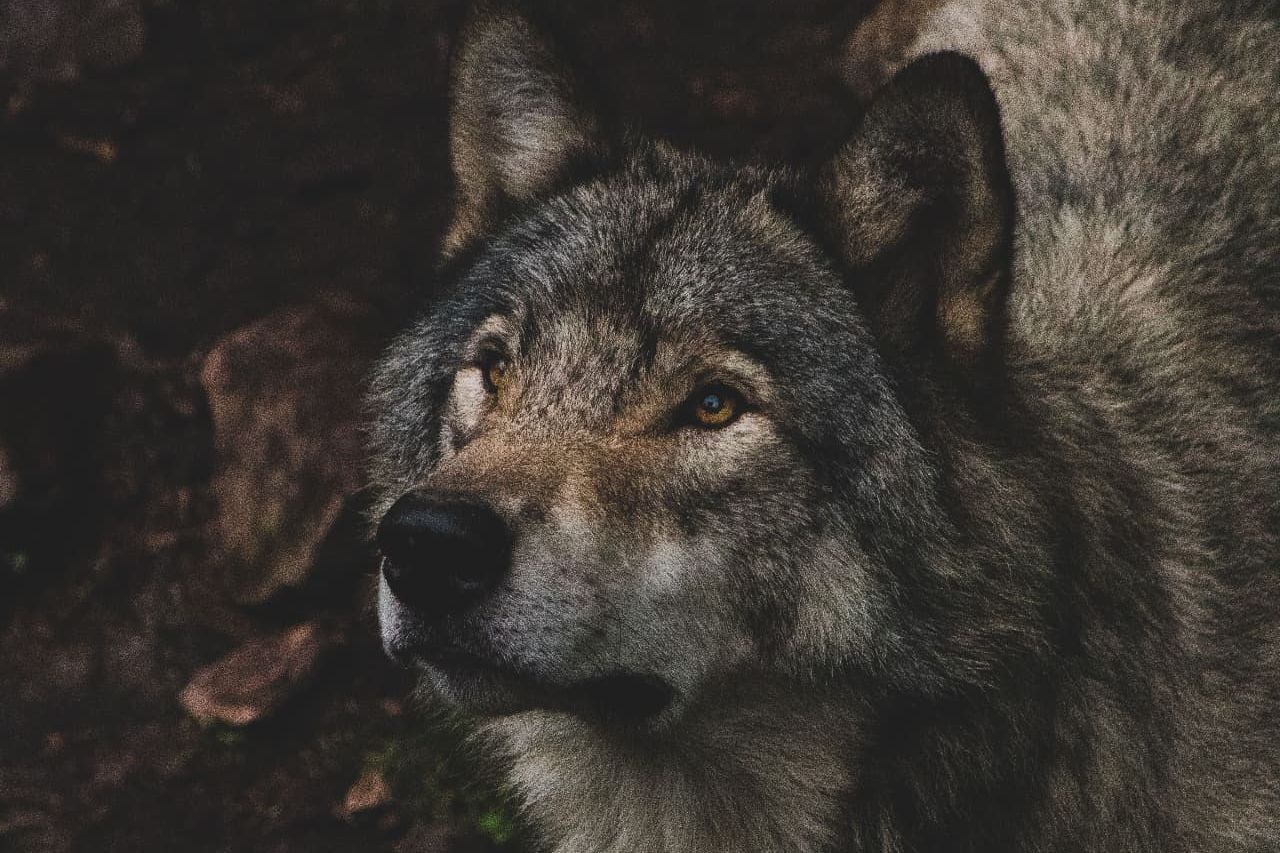
Before there was Wild Woman Sisterhood, there was a woman listening.
Listening to old women, family stories, fairy tales, dreams, grief, instinct, and to the things women said only after they had stopped trying to sound reasonable. Clarissa Pinkola Estés spent decades doing this work, first and foremost as a Jungian analyst, but also as what she calls a cantadora: a keeper and teller of old stories in the Latina tradition.
And before there was even a book, there was her voice.
In 1989, three years before Women Who Run With the Wolves reached bookstores, she released the work as an audio program. It found its audience before the publishing world had fully caught up with it. For a cantadora, it seems exactly right that the stories travelled first by voice. She did not begin by handing women a text. She told them stories.
Only later did those stories become the book I would come to call my bible.
And for many women, mine included, it gave language to something we had felt long before we knew how to name it: that the parts of us called too much, too instinctive, too emotional, too unruly might not be the parts that needed correcting at all.
Dr. Estés called that buried intelligence the Wild Woman.
Wild, in her hands, did not mean reckless. It meant instinct intact. The ability to know when to wait, when to disappear from sight, when to protect, when to create, and, only when there is no other way out, when to show your teeth.
Her point was never that women should become permanently ferocious.
It was that we were born with more than one response available to us.
Many of us, however, were handed a much shorter list.
We learned how to make ourselves agreeable long before we learned what to do with anger, suspicion, desire or the sudden certainty that something was wrong. Dr. Estés was interested in all the responses that remained underneath that training: the stillness that allows you to watch before acting, the instinct to move out of danger, the imagination required to make another life, and the force that appears when there is finally nowhere left to retreat.
Her wolf did not arrive as a convenient symbol. She had studied wildlife biology and spent time observing wolves, and what interested her was not their supposed savagery but their intelligence as social animals. She saw in them curiosity, endurance, intuition and devotion to their young and their pack. She also recognized something less flattering about the human imagination: wolves had long been hunted while simultaneously being described as ravenous and deceptive, and women who lived beyond prescribed boundaries had often been given remarkably similar characteristics.
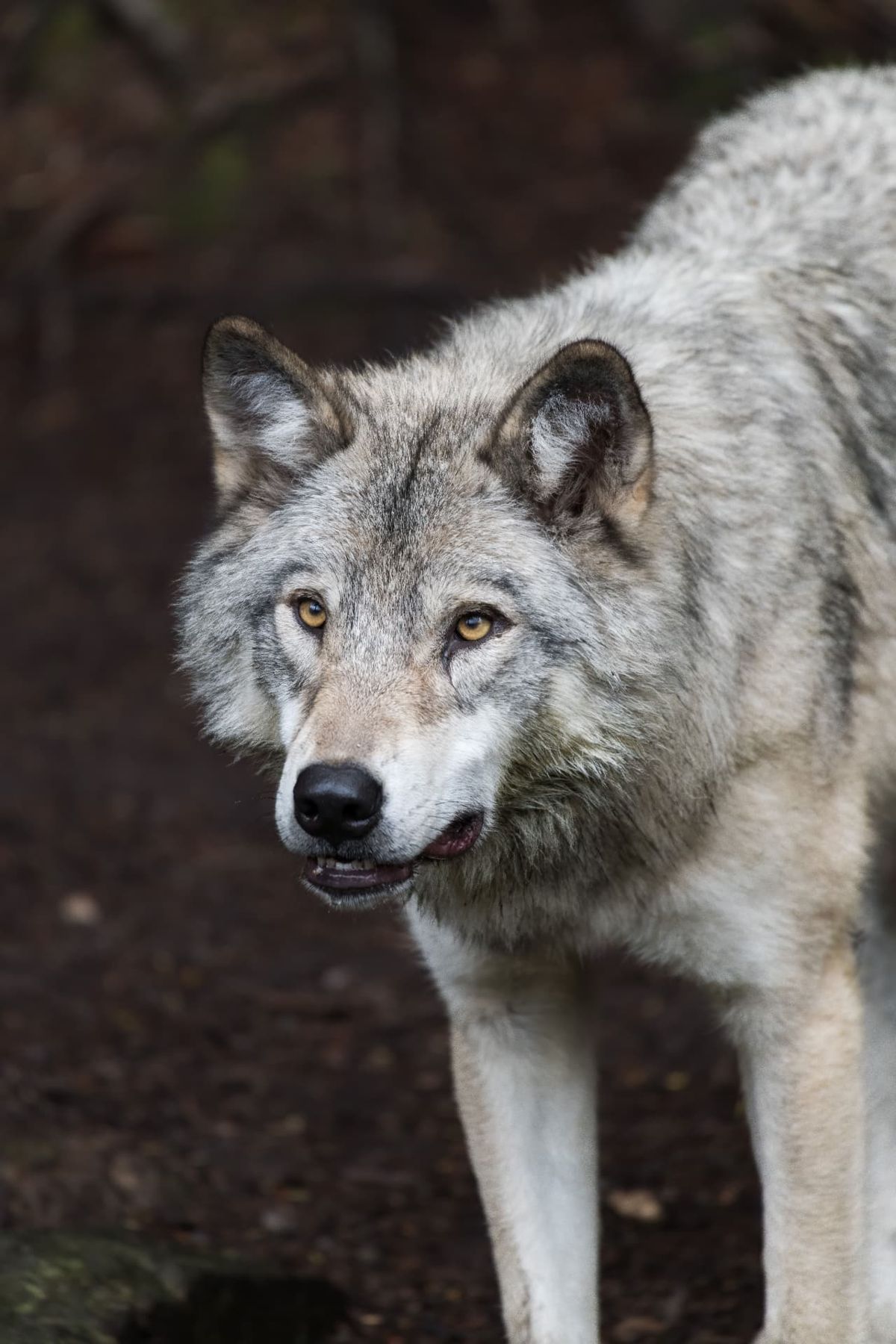
That parallel followed her into the old tales.
In Bluebeard, La Loba, The Little Match Girl and story after story carried across generations, she found women losing contact with what they knew, sensing danger and overriding themselves, or discovering that the qualities once dismissed as excessive were precisely the ones required for survival. The fairy tale, in her hands, stopped being something innocent told to children before sleep. It became evidence: generations of women had been leaving instructions for one another inside stories.
The woman making this argument was, by most accounts, nothing like the dramatic image the word wild might conjure. In a 1993 New York Times profile, journalist Dirk Johnson described her as cheerful and soft-spoken, wearing a ribbon in her hair and a medal of the Virgin Mary around her neck, having meat loaf and mashed potatoes in a neighborhood bar and grill. She spent afternoons writing there, surrounded not by wolves or wilderness but by the ordinary business of people eating lunch.
Even her interpretation of Mary refused the polished version. She called Mary fuerte, strong and fierce, and spoke of saints as women who worked with their hands, women whose palms would have carried calluses.
That refusal to accept the polished version runs through almost everything she writes. She keeps going back to what existed before it was made respectable: an older telling of a story, an instinct dulled by obedience, a woman edited until even she has forgotten what was cut away.
The same thing happened with the stories. She kept returning to versions older than the morality lessons layered over them, searching for what had survived beneath centuries of tidying. Often what she found was a woman far less obedient than the one we had been taught to remember.
By the time Women Who Run With the Wolves appeared in print in 1992, its spoken incarnation had already become an underground success. The book itself was not greeted by universal critical admiration, yet readers seemed almost indifferent to the debate. It travelled anyway. The current publisher reports more than 2.7 million copies sold, while the work became one of those unusual books that moved not only through bookstores but through friendships, therapy rooms and generations of women recommending it to one another.
There is something satisfying about that trajectory. Women had already recognized themselves in the work before the literary establishment had reached a conclusion about it.
Her authority also came from somewhere deeper than scholarship alone. Long before the book made her famous, she had worked with people living through trauma: children, veterans, grieving families and communities trying to make sense of experiences that had broken the ordinary language available to them. By her own account, she also served the Columbine High School community for three years after the 1999 massacre.
Survival, in her work, was never decorative. She had spent years close to people discovering what remained useful when life had torn through the usual answers.
And that is worth remembering now that wild has become such an easy word to decorate.
Sometimes wildness is leaving. At another moment it means becoming almost unnaturally still until you understand what you are looking at. It can show itself in making something, refusing something, enduring something, protecting what matters, or in realizing that a silence which once kept you safe has begun to cost you more than speaking.
The Wild Woman is not a fixed performance. Her intelligence lies partly in refusing to answer every circumstance in the same way.
Clarissa Pinkola Estés gave women back that range.
She did not replace one cage with another and tell us that a Wild Woman must be louder, fiercer, freer or more defiant than everyone around her. A woman could nurture without becoming harmless and love without surrendering her judgment; waiting might be wisdom rather than passivity, and walking away could require more ferocity than staying to fight.
More than three decades later, Women Who Run With the Wolves still circulates because the thing she was tracing is older than the decade that produced the book. It is that peculiar moment when something in us has known the answer for a very long time, while the rest of us is still gathering the courage to admit it.
Every wolf in this community owes something to that work.
Some women arrived here having read her until the spine of the book broke. Others know only a passage, an idea, perhaps even just the phrase Wild Woman. It hardly matters. Her language has travelled far beyond the pages that first carried it.
Stories capable of that kind of travel rarely stay with the person who first told them. They leave the mouth of one woman and take up residence in another.
A cantadora released those stories into the world by voice in 1989, before a publisher had put them between covers. The voice travelled first. Then came the book, and after it millions of women carrying fragments of those stories into rooms she herself would never enter.
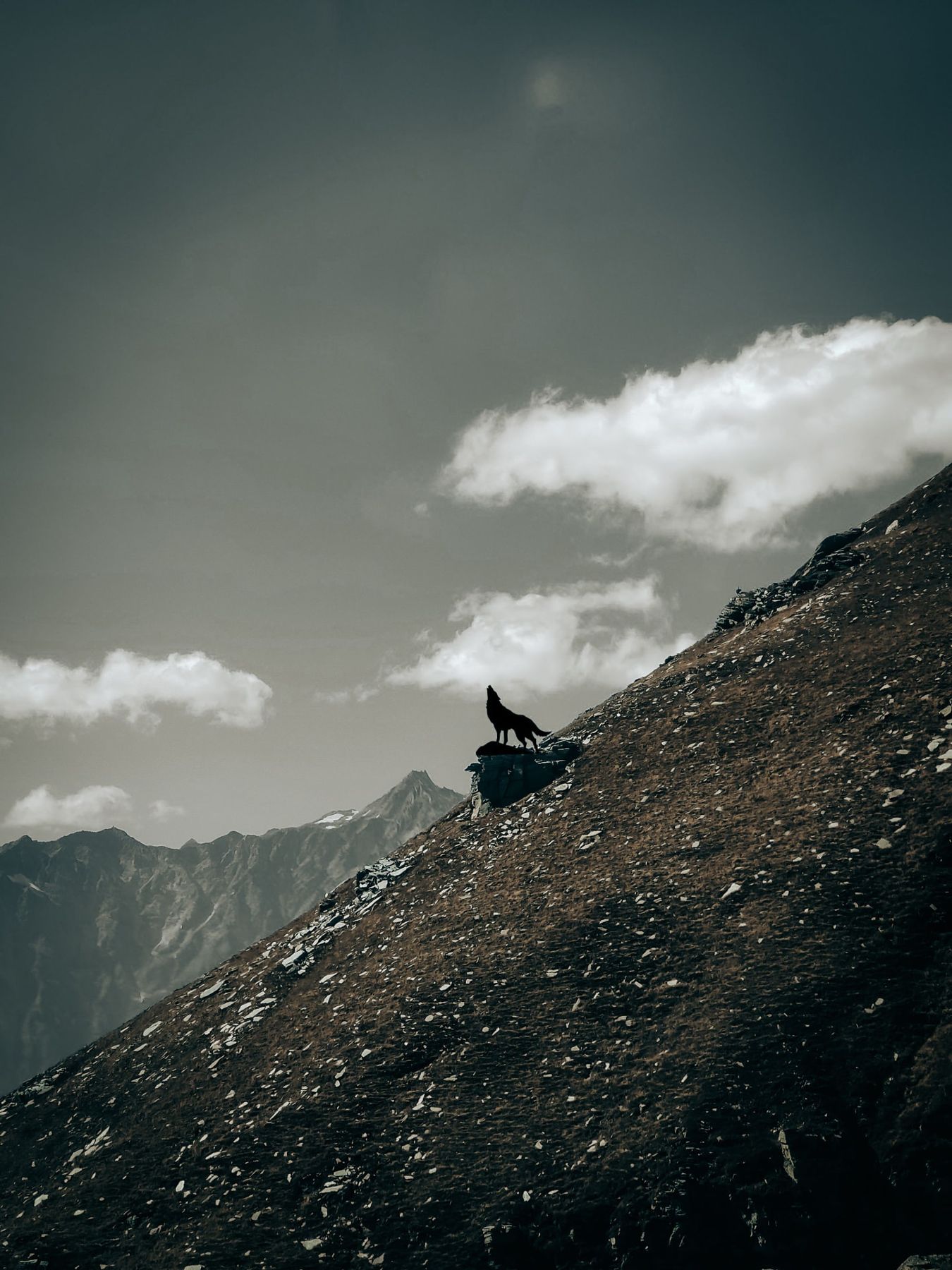
By then, the wolf no longer belonged only to her.
She had already begun running through the rest of us.
Source: Dirk Johnson, “Conversations/Clarissa Pinkola Estes; A Message for All Women: Run Free and Wild Like the Wolf,” The New York Times, February 28, 1993.
Photos: Stéphane Hurbé, Rob Bertrand and Nikhlesh Tyagi via Pexels.