

A seed and a handful of dirt look alike in the palm of your hand. Same color, same crumble. The difference shows later, when one of them does something.
Clarissa Pinkola Estés uses that picture for one of the most practical questions a woman can put to herself: what do I want? She calls it the sorting of the seed from the dirt, and she treats the asking as the way to stay connected to the wild. The sorting never finishes. It goes on for as long as we are alive.
What makes it hard is that wanting comes in two kinds, and at first they feel the same. Dr. Estés separates “things that beckon to us and things that call from our souls.” Whatever beckons arrives from outside: it is bright, available, well timed, flattering. It knows how to make an entrance. What calls from the soul has no interest in entrances. It is lower, slower, often inconvenient, and it turns up again after you were sure you had dealt with it.
She sees the difference most clearly in the choice of lovers. A lover, she says, cannot be picked the way you fill a plate at a smorgasbord. Appetite says yes to whatever looks good on the table, and the soul stays hungry anyway. A woman can eat well for years and still go to bed starving.
The tool for telling the two apart, in her telling, is intuition, which she names the soul's own messenger. Most of us know that messenger by its habits: the tightening in the stomach before the sentence is finished, the calm that settles over a decision while the mind is still building its case against it. Appetite explains itself at length. Intuition says very little and does not argue.
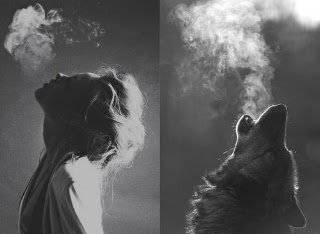
The lover is only her example. The same sorting applies to the house, the work, the friendship that has gone thin, the city where you have never quite unpacked. Each of them can be chosen from the table or chosen from the hunger.
It also has to be said that not every woman chooses freely. Money, safety, children, duty and other people's rules narrow the field, and wanting can cost a great deal. Sorting seed from dirt is still possible inside a small field. Sometimes it is the one freedom that stays.
A wolf does not stand at a table wondering what would look good. She lifts her head, finds what she is hungry for, and goes.
Source: Clarissa Pinkola Estés, Women Who Run With the Wolves (Ballantine Books, 1992).
Photos: via Pexels.