Before the Name
The first thing sisterhood took from me was the illusion that romantic love would be the most important relationship of my life.
I had spent years giving relationships a job description no human being could possibly fulfil. A partner was supposed to be love, intimacy, witness, adventure, refuge, intellectual companion and somehow also the place where the unfinished parts of me would finally settle down. My friendships with women had not offered much of a counterargument. Too often I knew the familiar arrangement: women studying one another, measuring, comparing, talking about whoever was absent. We called it friendship, although a surprising amount of our attention was spent looking sideways.
In 2008, I started an online community on a Dutch social media platform that eventually gathered around two thousand women. Some of the women I met there are still in my life today, long after the platform itself vanished. We travelled together, sought out places that held meaning for us, read books that left us with better questions, and gathered in circles. Gradually, the subject of our conversations moved. Men and other people's lives occupied less of the room. Our own choices, fears, contradictions and curiosities occupied more.
What surprised me most was the relief. Another woman could be beautiful without requiring me to feel less beautiful. She could possess a courage I lacked without becoming an accusation. I could admire what she had made of her life without immediately calculating what her success said about mine. Friendship was no longer quite an adequate word for what was developing between us. Sisterhood carried more of it.
Around the same time, Women Who Run With the Wolves entered my life. Clarissa Pinkola Estés was writing about something I had begun to recognise from another direction: what happens when instinct is overruled so repeatedly that adaptation starts masquerading as personality. Her Wild Woman interested me because she had little concern with being impressive. She was concerned with remaining intact.
Nature was older in me than either of those discoveries. Long before I had language for archetypes, I knew the bodily relief of entering a place where human status had no currency. Weather did not care who was admired. A river was unimpressed by accomplishment. Among trees, many of the distinctions we work so hard to maintain become briefly ridiculous.
Wild Woman Sisterhood began on January 15, 2013, where those things met. Within the first year, around a million people were following the Facebook page. What stays with me about that now is the speed of recognition. We did not have to persuade women that something was missing. They supplied that part themselves.
After Awakening
The cultural landscape around women has altered considerably since then. Women's circles, menstrual awareness, archetypes, cyclical living and feminine spirituality now support retreats, certifications, businesses and algorithms. Before breakfast, a woman can be instructed to heal, regulate, embody, release, align and transform, often by people who have never met her.
Much of that work has value. The difficulty is abundance. Ideas repeated often enough can survive long after their meaning has been rubbed smooth.
For Wild Woman Sisterhood, this changes the work. In 2013 we spoke frequently about awakening your Wild Nature. I find awakening less interesting now. Insight is cheap compared with rearrangement. A woman can understand something profound about herself on Sunday and still organise Monday around the same fear.
The real test begins when self-knowledge acquires consequences. It meets money, children, loyalty, an ageing parent, marriage, illness, sex, ambition, menopause, grief, or the inconvenient discovery that several people benefited from the version of you that you have outgrown.
So the language that makes sense to me now is Embody your Wild Nature. Wild Nature itself has become less mystical with age. I understand it as the part of us that can still recognise our own life beneath everything we have agreed to call normal. The interesting question is what happens when that recognition starts asking for changes.
What Time Complicated
Sisterhood has become less romantic to me as well. In 2013, I still assumed rather generously that women who shared the same values would naturally be safe for one another. Nearly fourteen years of Wild Woman Sisterhood is enough to complicate that belief. Shared books do not guarantee character, and fluency in spiritual language can coexist perfectly well with an inability to apologise.
A woman can speak beautifully about compassion while punishing anyone who disappoints her. Avoidance can be renamed peace; a refusal to set boundaries can be praised as love. Entire philosophies can be constructed around never having the conversation one most needs to have.
I have no claim to innocence here. There was a period when the success of Wild Woman Sisterhood affected my sense of myself more than I understood at the time. Being the founder of something enormous can begin to feel like evidence about the person who founded it. The awkward thing about inflated importance is that from the inside it tends to resemble a perfectly reasonable assessment of the facts. I saw the distortion more clearly afterwards.
That experience changed what I trust in sisterhood. Some women have disappeared from my life without betrayal or drama; the relationship simply reached its natural limit. Other friendships became more substantial because we returned to conversations neither of us particularly enjoyed. There have also been women from whom distance was the sane response.
This is where I part company with the idea that every uncomfortable relationship is a mirror. Jealousy can certainly reveal us to ourselves. Another woman's confidence, work, sensuality or freedom may expose a neglected appetite of our own. But self-examination can become another form of vanity if it assumes every encounter is fundamentally about us. A harmful friendship does not acquire depth merely because we can produce an interpretation of it.
Nature has become more useful to me as I have become less sentimental about her. I have no need for an ecosystem arranged as a collection of encouraging metaphors. Nature is magnificent, wasteful, cooperative, violent, ingenious and indifferent. A dead tree can become more biologically crowded than it was while alive. An organism may survive precisely because it stops feeding a part of itself. There is more to learn there than in another assurance that every flower has its moment.
The natural world also prevents me from treating Wild Nature as a purely psychological idea. How we live has material consequences beyond the self. Sustainability belongs within Wild Woman Sisterhood because an authentic life that depends on remaining incurious about who or what pays for our comforts strikes me as an incomplete form of authenticity.
Age has complicated another idea I once used rather freely: womanhood. At twenty-five, I wanted answers I would no longer recognise as questions. A female life does not simply accumulate years while remaining essentially the same subject. Desire can change its object. A body revises its terms. Children arrive, or do not, or leave. Death moves from abstraction into the family. Achievement can lose its narcotic effect. A woman who has become exceptionally competent at surviving may eventually wonder why survival has been given so much authority over her personality.
Those differences matter increasingly to where Wild Woman Sisterhood goes next. I want us to speak with greater precision to women in different phases of life while also allowing those phases to meet. Some knowledge genuinely requires years. Other knowledge can become so buried beneath years that it takes a younger woman to make it visible again.
My second book, Awakening the Wild Feminine, grew from this territory and will be published on February 2, 2027. I could not have written it in 2013; too much of it depended on years I had not yet lived. My own life is in it, but so are the traces of Wild Woman Sisterhood: circles, retreats, friendships, letters and messages from women I have never met, and nearly fourteen years of watching female lives refuse the neat chronology we often impose upon them.
The book works with Maiden, Mother, Queen and Crone, though I am less interested in using archetypes as identities than as lenses. A useful archetype should reveal complexity, not give a woman another costume to wear.
The Work That Remains
Wild Woman Sisterhood today is a global movement, followed by around 3.5 million people across Facebook and Instagram. I am grateful for that reach, while also knowing something I understood less clearly in the beginning: scale is exceptionally good at disguising loneliness. Millions of women can press follow and still go to bed without one woman they would call when the floor drops out of their life.
Women still tell us they have never found sisterhood of that kind. That remains one of the most important unfinished parts of this work. I no longer believe belonging can simply be provided. A retreat can expose a woman to another quality of relationship, but the more interesting measure is what survives the journey home. I want to understand more about friendships that can exist without a facilitator, a prepared room or an agreed vocabulary; relationships capable of accommodating another woman's success, absence, difference and evolution without requiring her to remain recognisable.
Our relationship with nature will also become more literal. The seasonal guides we are creating for our newsletter will be written four times a year, with separate versions for the Northern and Southern Hemispheres. It seems a small detail until you consider how peculiar it is to praise our connection with nature while informing a woman in Australia that autumn has begun because someone in Europe scheduled an autumn newsletter.
There will be gatherings again, and more attention to women whose lives are worth examining closely: artists, writers, musicians, women working with the land, women guiding other women, and women whose convictions can be detected in their decisions rather than merely in their vocabulary. I am increasingly interested in what a belief looks like once it has cost its owner something.
In 2013, I thought sisterhood's great gift was the discovery that women could support one another differently. I still believe that, but it now seems like the beginning of the subject rather than its conclusion. The sisters who have mattered most in my life have not merely made me feel supported. They have made certain forms of self-deception much harder to sustain because they knew both my words and the life those words were supposed to describe.
The Wild Woman has become less mythical to me for much the same reason. I no longer picture some buried woman waiting to be summoned from the depths. More often I recognise her in the uncomfortable instant when a woman knows perfectly well what is true and discovers that knowing has removed one of her excuses.
That is the territory I want Wild Woman Sisterhood to enter now: the less photogenic years after recognition, when what a woman knows has to find its way into the life she actually lives.
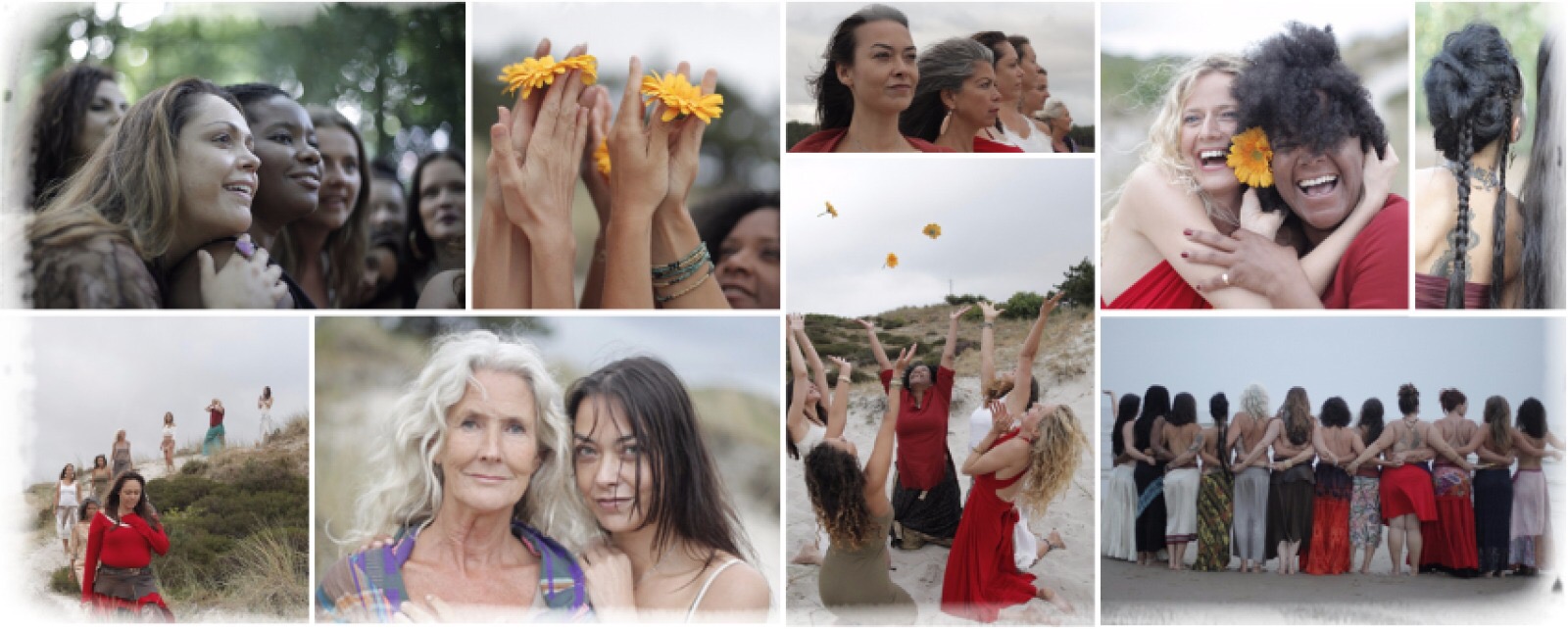
Photos: Bibi Friman